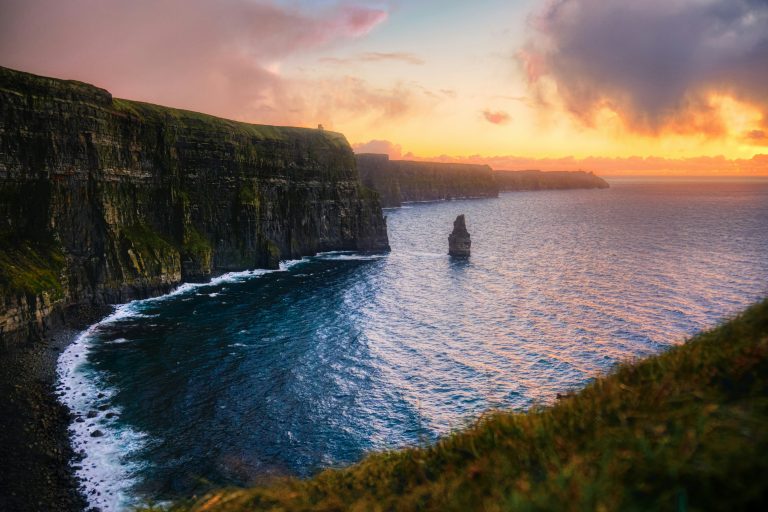
Things to Do in Kerry — The Complete Guide
Kerry is the third largest county in Ireland and arguably the most dramatic. It occupies the southwest corner of the island — a rugged, Atlantic-battered landscape of mountain ranges, sea inlets, ancient peninsulas, and villages that feel genuinely untouched by the modern world.
It’s home to Ireland’s highest mountains, its most famous coastal drives, some of its finest beaches, and a cultural identity that remains distinctly its own. Kerry people are proud of their county in a way that borders on competitive — and having seen all 32 counties myself, I can confirm the pride is entirely justified.
Why Kerry Should Be Your First Stop in Ireland
If you only have time for one county in Ireland, make it Kerry. No other county packs in as much variety — dramatic coastline, mountain scenery, ancient history, world-class food, and genuine Irish character — in such a compact area.
The Iveragh Peninsula alone contains enough to fill a week. Add the Dingle Peninsula, the Beara Peninsula, Killarney National Park, and the Skellig Islands and you have an embarrassment of riches that most visitors only scratch the surface of.
The Ring of Kerry
The Ring of Kerry is Ireland’s most famous driving route — a 179km loop around the Iveragh Peninsula that takes in some of the most spectacular coastal scenery in Europe. It passes through Killorglin, Cahersiveen, Waterville, and Kenmare, with dramatic Atlantic views, mountain passes, and ancient stone forts along the way.
The unmissable stops include the Coomakista Pass viewpoint (where you can see the Skellig Islands on clear days), Derrynane Beach, and the descent through Moll’s Gap back into Killarney.
The Ring is best driven anticlockwise to avoid tour coaches, and an early start — before 9am — means you’ll have the best sections to yourself. Allow a full day and don’t rush it.
→ Read the full Ring of Kerry Driving Guide
The Dingle Peninsula
The Dingle Peninsula is Kerry’s second great driving route — and many locals will tell you it’s even better than the Ring of Kerry. It’s certainly less crowded and more rugged, with a stronger Irish language tradition and a landscape that feels wilder and more remote.
The Slea Head Drive is the essential route — a loop around the western tip of the peninsula past ancient beehive huts (clochans), cliff-edge viewpoints, and some of the most dramatic ocean scenery in Ireland. The Blasket Islands sit just offshore — abandoned since 1953 and hauntingly beautiful.
Dingle town itself is one of Ireland’s finest — a colourful, characterful fishing town with excellent restaurants, traditional music sessions most nights, and Fungie the dolphin (who lived in the harbour for decades, though has been absent since 2020).
→ Read the full Dingle Peninsula Road Trip guide
Killarney and the National Park
Killarney is Kerry’s main town and the natural base for exploring the county. It has the best range of accommodation, restaurants, and services, and sits right at the edge of Killarney National Park — Ireland’s oldest national park and one of its most beautiful.
The National Park covers 102 square kilometres of lakes, woodland, and mountain. The three lakes — Lough Leane, Muckross Lake, and the Upper Lake — are stunning, surrounded by ancient oak woodland and overlooked by the McGillycuddy Reeks. Red deer roam freely and are commonly spotted near the lake shores in the evening.
The key sights within the National Park include:
- Muckross House and Gardens — a Victorian mansion with beautiful lakeside gardens, free to walk around
- Muckross Abbey — a 15th century Franciscan friary, remarkably well preserved and atmospheric
- Torc Waterfall — a short walk from the road, impressive after rain
- Ladies View — a famous panoramic viewpoint over the Upper Lake, named after Queen Victoria’s ladies-in-waiting who admired it in 1861
- The Gap of Dunloe — a dramatic glacial valley cutting through the mountains, best explored by bike or jaunting car
→ Read the full guide to Things to Do in Killarney
The Skellig Islands
The Skellig Islands are one of Ireland’s most extraordinary places — two rocky pyramids rising from the Atlantic, 12km off the Kerry coast. Skellig Michael, the larger of the two, is a UNESCO World Heritage Site containing a remarkably intact 6th century monastic settlement perched 200 metres above the ocean.
Landing on Skellig Michael requires a boat trip from Portmagee or Ballinskelligs on the mainland. The crossing takes about 45 minutes each way and is weather dependent — trips are cancelled frequently, particularly outside the summer months. On the island, a steep climb of 618 stone steps brings you to the monastery — one of the most extraordinary human achievements you will ever see in person.
Skellig Michael became internationally famous as a filming location for Star Wars: The Force Awakens and The Last Jedi. The monastery features in the final scenes of The Force Awakens.
Kerry’s Best Beaches
Kerry has some of the finest beaches in Ireland — wild, Atlantic-facing strands of golden sand that are largely empty outside of peak summer weekends. Almost all require a car to reach.
| Beach | Location | Character |
|---|---|---|
| Inch Beach | Dingle Peninsula | 5km sand spit, surfing, dramatic views |
| Derrynane Beach | Ring of Kerry | Sheltered, turquoise water, abbey ruins |
| Rossbeigh Beach | Ring of Kerry | Wild sand spit, Atlantic-facing, empty |
| Kells Bay | Ring of Kerry | Sheltered horseshoe bay, exotic gardens nearby |
| Banna Strand | North Kerry | Vast flat strand, very exposed, dramatic |
| Clogher Beach | Dingle Peninsula | Small, wild, rarely visited, stunning cliffs |
Golf in Kerry — World Class Links
Kerry is one of the great golfing destinations in the world — a fact well known among serious golfers but surprisingly underappreciated by general visitors. The county has a concentration of world-class links courses that rivals anywhere in the British Isles, set against some of the most dramatic coastal scenery imaginable.
The Atlantic winds, the clifftop fairways, and the views across Dingle Bay and the Skellig Islands make playing golf in Kerry an experience unlike anywhere else. American golfers in particular come specifically for the courses — and many plan entire Ireland trips around their tee times.
The standout courses include Waterville Golf Links — consistently ranked among the top 20 courses in the world and Tom Watson’s personal favourite — and Ballybunion Golf Club, which has two championship links courses and regularly appears in world top 10 lists. Tralee Golf Club, designed by Arnold Palmer on a spectacular clifftop site, and Dooks Golf Club, one of Ireland’s oldest links overlooking Dingle Bay, complete a quartet that would be the envy of any county in the world.
→ Read the full guide to Golf in Kerry — courses, tips and how to plan your trip
Food, Pubs and Where to Eat in Kerry
Kerry’s food scene has improved dramatically in recent years. The county has always had excellent raw ingredients — Atlantic seafood, Kerry lamb, local dairy — and a new generation of chefs and producers are making the most of them.
Seafood
Fresh seafood is the thing to eat in Kerry. The fishing ports of Dingle, Cromane, and Cahersiveen land some of the best shellfish in Ireland — Dingle Bay prawns, Cromane mussels, and Valentia Island scallops are all world class. Any restaurant worth its salt in Kerry will have local seafood on the menu.
Traditional Pubs
Kerry has some of Ireland’s finest traditional pubs — small, dark, full of local conversation and live music. Look for sessions (traditional music) in Dingle, Killarney, and Cahersiveen on weekend evenings. Dick Mack’s in Dingle and O’Connor’s in Cahersiveen are two of the greats.
Where to Eat
For fine dining, Killarney and Kenmare have the best options. Kenmare in particular punches well above its weight for a small town — several excellent restaurants cluster around the town square. For casual eating, any good chipper in a Kerry town will serve fresh fish landed that morning.
Getting Around Kerry
You need a car to see Kerry properly — full stop. Public transport in the county is minimal outside of Killarney town, and the best experiences are almost all off the main routes.
If you’re flying into Kerry Airport (KIR) near Farranfore, car hire is available at the airport. More commonly visitors fly into Cork or Shannon and drive to Kerry — a journey of 1.5–2.5 hours depending on your starting point. Dublin to Killarney is about 3.5 hours by car or train.
Book your rental car in advance — Kerry is one of Ireland’s most popular destinations and availability is extremely limited in summer, particularly for automatic transmission vehicles.
For getting around without a car, the Killarney Jaunting Car (horse-drawn carriage) is a genuine local tradition and a lovely way to explore the National Park. Cycling is also excellent in the National Park and on quieter roads — bike hire is available in Killarney town.
When to Visit Kerry
Kerry can be visited year round but the experience varies significantly by season.
| Season | Weather | Crowds | Verdict |
|---|---|---|---|
| May–June | Good, long evenings | Moderate | Best overall — warm, bright, manageable crowds |
| July–August | Warmest, most rain | Very busy | Peak season — book everything months ahead |
| September | Settled, warm | Quieter | Excellent — best value, good weather, fewer crowds |
| October–March | Wet, stormy | Very quiet | Wild and dramatic but cold — some attractions closed |
September is genuinely the best kept secret in Kerry travel — the summer crowds have gone, the weather is often the most settled of the year, accommodation prices drop, and the light on the mountains and lakes is extraordinary.
Where to Stay in Kerry
Killarney is the most practical base — the best transport links, widest range of accommodation, and central location for the Ring of Kerry and National Park. Compare hotels and B&Bs in Killarney here.
Kenmare is the most charming overnight stop — a beautiful Georgian town with excellent restaurants and a calmer atmosphere than Killarney. Ideal if you want to avoid the tourist crowds while still having access to great food and accommodation.
Dingle town is the best base for the Dingle Peninsula — colourful, characterful, with good restaurants and traditional pubs. Staying in Dingle gives you early morning access to the Slea Head Drive before the day visitors arrive.
Frequently Asked Questions
A minimum of 3 days to cover the Ring of Kerry and Killarney. 5 days to add the Dingle Peninsula. A week or more if you want to explore properly — visit beaches, take a Skellig boat trip, and spend evenings in local pubs without rushing. Kerry consistently leaves visitors wishing they’d stayed longer.
Yes, but with realistic expectations. Winter Kerry is wild, dramatic, and empty — a completely different experience to summer. Many tourist attractions and some restaurants close from November to March. The scenery in low winter light is spectacular. It’s worth visiting if you enjoy dramatic landscapes and don’t mind rain and cold.
Technically possible but not recommended. Both routes deserve a full day each. Trying to do both in one day means rushing through two of Ireland’s finest drives and missing the best stops. If you only have one day, choose one — most people prefer the Ring of Kerry for a first visit, but locals tend to prefer Dingle.
Kerry is famous for the Ring of Kerry, Killarney National Park, the Skellig Islands, the Dingle Peninsula, the McGillycuddy Reeks (Ireland’s highest mountains), and the Gaelic football team — the most successful in the history of the sport. It is also known for its strong Irish language tradition, particularly on the Dingle Peninsula.
Yes — a car is essential for seeing Kerry properly. Public transport in the county is minimal and the best attractions are almost all inaccessible without your own vehicle. Read our full guide on getting around Ireland by car.
Ready to explore Kerry? Compare hotels and B&Bs across the county — and book your rental car early to get the best rates.